Many homeowners budget for lumber, labor, permits, and materials—but overlook one of the most important parts of the project: the design. That often leads to avoidable problems. Contractors may quote different scopes, layouts may not fit the yard, and changes during construction can quickly increase costs. So, how much does it cost to design a deck?.
The answer depends on the size of the project, the complexity of the layout, the level of detail required, and whether you need basic ideas or permit-ready drawings. In this guide, you’ll learn what affects deck design pricing, what homeowners should expect, and why smart planning often saves more than it costs.
Why Deck Design Is Worth Paying For
A deck is easier—and far cheaper—to change on paper than after construction begins. Professional planning can help you:
- Avoid layout mistakes
- Improve backyard flow
- Compare contractor bids accurately
- Reduce change orders
- Speed up permit preparation
- Build with confidence
Good design is not just about appearance. It helps protect your time, budget, and final result.
How Much Does It Cost to Design a Deck?
 There is no one fixed price because every project is different. Deck design costs typically depend on:
- Deck size
- Shape and layout complexity
- Multi-level features
- Stairs and landings
- Roof or screened porch additions
- Permit drawing requirements
- Site challenges
- Revisions requested
- Level of customization
A simple rectangular deck concept usually requires less work than a custom outdoor living space with stairs, roof framing, and multiple zones. The best way to get accurate pricing is based on your specific project goals.
Typical Levels of Deck Design Service
Not all design services include the same deliverables. Understanding the difference helps you compare value.
Concept Design
Best for early planning and ideas. May include:
- Basic layout
- Size recommendations
- Functional zones
- General project direction
Useful when exploring options before hiring a builder.
Custom Build Plans
Best when you know you want to move forward. May include:
- Detailed dimensions
- Layout plans
- Stair placement
- Structural direction
- Contractor-ready information
Useful for accurate contractor pricing and smoother construction. Explore our Deck Design Service.
Permit-Ready Plans
Best when your local jurisdiction requires documentation. May include:
- Construction drawings
- Structural notes
- Footing layout
- Required details for submission
Useful when approval is required before building begins.
Explore our Deck Permit Plans.
What Impacts Deck Design Cost the Most?
Size of the Deck
Larger decks usually require more planning, dimensions, and coordination.
Complexity of Shape
Straightforward rectangular layouts are faster to design than curved, angled, or wraparound projects.
Elevation and Stairs
Raised decks with stairs often need more detailed planning than low-profile platforms.
Covered Features
Pergolas, roofs, screened porches, and outdoor kitchens increase design complexity.
Revisions
The more changes requested after the first concept, the more time the process may require.
Permit Requirements
Plans intended for permit submission usually need more detail than basic concept layouts.
Real Homeowner Example
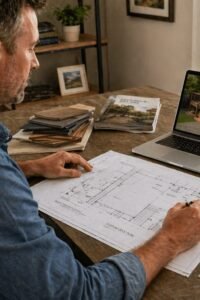 A homeowner requested quotes for an 18′ x 16′ deck without plans. One contractor priced a basic platform. Another included stairs and upgraded railings. A third assumed a different layout entirely. The quotes were impossible to compare.
After getting clear design plans, each contractor priced the same scope. The homeowner could compare bids fairly and move forward with confidence. Sometimes the design cost saves money immediately.
Is Paying for Design Better Than Free Estimates?
Many contractors offer free estimates, but estimates are not the same as professional design. A free quote may be based on assumptions. A real design process helps define what you actually want before construction starts. That matters because unclear scope often leads to:
- Budget surprises
- Mid-project upgrades
- Delays
- Miscommunication
- Unused space
- Regret after completion
Clear plans before hiring often create a smoother project. Learn more about How It Works.
How to Get the Best Value From Deck Design
To make the most of your investment:
- Know your approximate budget
- Share photos of your yard
- Explain how you want to use the space
- Mention permit needs early
- List must-have features
- Be decisive with revisions
- Think long term, not just lowest price
The better your input, the better the final result.
Should You Design Before Getting Contractor Quotes?
Yes—in many cases, this is the smartest path. With plans first, you can:
- Get apples-to-apples quotes
- Reduce misunderstandings
- Shorten decision time
- Prevent expensive scope changes
- Build what you actually want
Without plans, each quote may represent a different project. Start planning here: Design Your Deck
What i-Decks Provides
i-Decks helps homeowners across the United States with:
- Custom deck design plans
- Permit-ready drawings
- Screened porch design
- Clear layouts for builders
- Online design support
Whether you need ideas, contractor-ready plans, or permit documents, the goal is simple: help you start smarter. See our Deck Design Service
FAQ: How Much Does It Cost to Design a Deck?
1. Is deck design included with construction?
Sometimes. Some builders include basic layouts, while others charge separately or expect plans first.
2. Why should I pay for design before building?
Because mistakes are cheaper to fix before construction starts. Good plans can save time, money, and stress.
3. Are permit plans different from design plans?
Often, yes. Permit plans usually require more technical detail for approval.
4. Can I get contractor quotes without plans?
Yes, but quotes may vary widely if each contractor assumes a different scope.
5. How do I get an exact price for deck design?
The most accurate way is to request pricing based on your deck size, features, and project needs.
So, how much does it cost to design a deck?
It depends on the size, complexity, and level of detail required—but the bigger question is how much poor planning can cost if you skip it. A smart design helps avoid mistakes, compare quotes fairly, and move into construction with clarity. For many homeowners, that makes design one of the smartest investments in the entire project.

1 comment
[…] deck plans are pre-designed layouts that can be downloaded or purchased through websites, design platforms, and home improvement […]