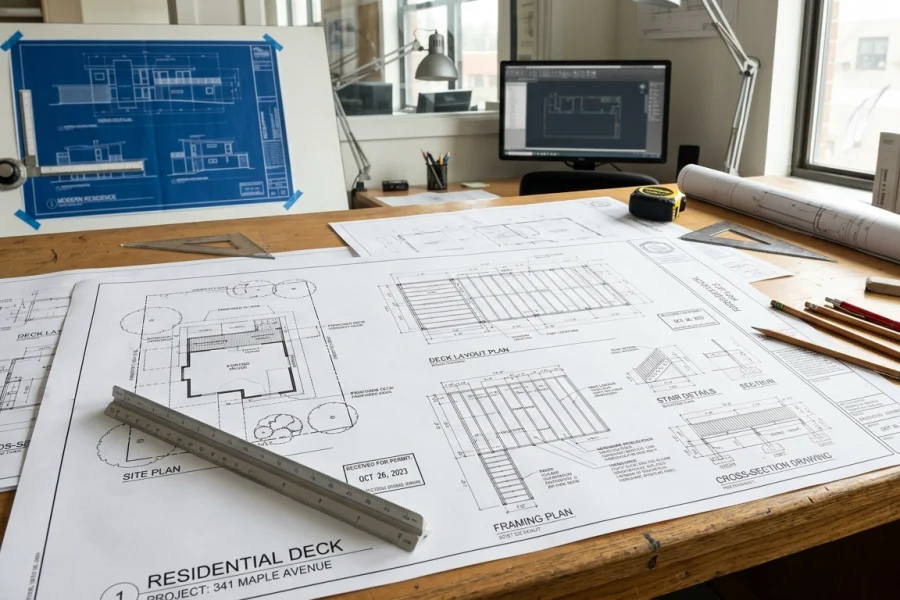
If you’re preparing to build a new deck, you’ve probably heard the term permit plans more than once. Whether you’re speaking with a contractor, researching permit requirements, or planning your project online, permit plans often become a central part of the conversation.
But what exactly are deck permit plans, and what do they include?
Many homeowners assume permit plans are simply a basic sketch showing the deck size and location. In reality, permit-ready drawings typically provide much more information. They help communicate the project clearly to building departments, contractors, and homeowners before construction begins.
At i-Decks, we help homeowners create custom deck plans and permit-ready drawings designed to simplify project planning and improve communication throughout the process. Understanding what is typically included can help you avoid surprises, improve communication, and move through the planning process more efficiently.
What Are Deck Permit Plans?
 Deck permit plans are a set of drawings and supporting information prepared to help describe a proposed deck project before construction starts.
Their purpose is simple: they allow building departments and other project stakeholders to understand what is being built and how the various components fit together.
While specific requirements vary from one jurisdiction to another, permit plans generally provide enough detail to communicate the overall design, layout, and key construction elements of the project.
Think of them as the blueprint that helps transform an idea into a buildable project. Many homeowners begin this process through a professional deck design service before moving into permitting and construction.
Why Detailed Permit Plans Matter
Many permit delays occur because information is missing, unclear, or incomplete. A reviewer looking at your application needs to understand:
- Where the deck will be located
- How large it will be
- How people will access it
- How the structure is organized
- How it relates to the existing home
The clearer the plans, the easier it becomes for reviewers to evaluate the project and for contractors to understand what needs to be built. Detailed plans also help homeowners visualize the finished result before committing to construction.
If you’re researching local requirements, our guide to deck permit requirements by state can help you better understand how regulations vary across jurisdictions.
Site Plan: Showing Where the Deck Will Be Built
One of the most important components of a permit package is the site plan. A site plan provides an overview of how the proposed deck fits within the property.
Typically, it helps identify:
- The existing home
- Property boundaries
- The proposed deck location
- Nearby structures
- Important site relationships
This information allows reviewers to understand where the project will sit and how it interacts with the surrounding property. For homeowners, the site plan often serves as the first opportunity to confirm that the deck is positioned exactly where they want it.
Deck Layout Plan: The Overall Design
The layout plan is often the drawing homeowners find most familiar. This plan typically illustrates the shape and configuration of the deck itself, helping everyone involved understand the overall design.
A layout plan may show:
- Deck dimensions
- Shape and footprint
- Stair locations
- Entry points
- Major design features
This drawing acts as the foundation for the rest of the permit package because it establishes the overall scope of the project.
Framing Plan: How the Structure Is Organized
A deck is more than the surface you walk on.
Underneath the decking material is a structural framework that supports the entire project. Framing plans help communicate how major structural components are arranged. Depending on the project, these drawings may illustrate:
- Joist layout
- Beam locations
- Post placement
- Framing direction
- Structural relationships
These details help reviewers and contractors understand how the deck is intended to be constructed.
Stair Details
Stairs are frequently one of the most important elements in a deck design. They affect usability, traffic flow, safety, and the overall appearance of the project.
Permit plans often include stair information that helps clarify:
- Stair placement
- Direction of travel
- Relationship to the deck
- Connection to the yard or surrounding areas
Providing stair details upfront can help avoid questions later during the review process.
Guardrail Information
For projects that include guardrails, permit plans may identify where those features are located within the design. Because guardrails contribute to both safety and functionality, reviewers often expect them to be reflected in the drawings.
Including this information early helps create a more complete picture of the project.
Connection Details
When a deck is attached to an existing home, permit plans often include drawings that help explain how the connection is intended to work.
This area can be especially important because it affects how the new structure relates to the existing building. Clear connection details help reduce uncertainty during plan review and provide valuable guidance during construction.
Project Notes and General Information
Many permit plans also include notes that help explain aspects of the project not immediately obvious from the drawings alone. These notes may provide:
- General project information
- Material references
- Construction clarifications
- Additional drawing explanations
While often overlooked by homeowners, these notes can play an important role in improving communication throughout the project.
Why Generic Sketches Often Fall Short
Some homeowners begin the permit process with a hand-drawn sketch or a simple online layout. While these can be useful for brainstorming ideas, they often lack the detail needed to support a smooth permit review.
Common issues include:
- Missing dimensions
- Incomplete site information
- Unclear stair locations
- Lack of structural organization
- Missing project notes
As a result, reviewers may request additional information before moving forward. A more complete permit package helps reduce these situations. In fact, many of the issues that lead to delays are covered in our guide on why deck permits get rejected.
What’s the Difference Between Deck Design Plans and Deck Permit Plans?

Homeowners often use these terms interchangeably, but they are not always the same thing.
Deck design plans focus on the overall appearance, layout, and functionality of the project. They help homeowners visualize the finished outdoor space and make decisions about size, stairs, features, and traffic flow.
Deck permit plans, on the other hand, typically include additional details needed for permit review and construction planning. Many successful projects begin with a professional deck design service before progressing into permit-ready documentation.
A Real Homeowner Example
A homeowner planning a backyard deck believed their project was simple enough to submit using a basic layout drawing.
The deck footprint was clearly shown, but several important details were missing. The permit office requested clarification regarding the deck location, stair arrangement, and additional supporting information. Although the project was eventually approved, the process took longer than expected because revisions were required.
A more detailed permit package from the start could have streamlined the review process and reduced delays.
Benefits of Having Complete Permit Plans
Well-prepared permit plans do more than support permit applications. They also help homeowners and contractors stay aligned throughout the project.
Benefits often include:
- Clearer project communication
- Fewer misunderstandings
- Better contractor pricing
- Improved project organization
- Reduced permit revisions
- Greater confidence before construction begins
The planning phase is often where the biggest project savings occur because changes are easier to make on paper than after construction starts.
Quick Checklist: What Homeowners Should Expect in Permit Plans
While requirements vary by location, homeowners commonly expect permit plans to include:
- A site plan
- A deck layout plan
- Structural or framing information
- Stair details
- Guardrail information where applicable
- Connection details
- Project notes and supporting information
The exact contents depend on the project and local requirements, but these components form the foundation of many permit-ready drawing packages.
How i-Decks Helps Homeowners Prepare Permit Plans
At i-Decks, we create custom deck plans designed to help homeowners move confidently from concept to construction. Our services include:
- Custom deck design plans
- Permit-ready drawings
- Screened porch plans
- Contractor-ready layouts
- Online design support across the United States
Whether you’re planning a simple backyard deck or a larger outdoor living space, clear plans can help simplify the process and reduce uncertainty before construction begins.
Learn more about our Deck Permit Plans service or start your project with Design Your Deck.
Deck permit plans play an important role in turning an idea into a buildable project
By clearly communicating the layout, location, structural organization, and major project details, permit plans help homeowners, contractors, and reviewers stay aligned from the beginning.
The more complete the plans, the smoother the project typically becomes.
Whether you’re planning a simple platform deck, a multi-level outdoor living space, or a covered pavilion, starting with detailed permit-ready drawings can save time, reduce revisions, and help your project move forward with confidence.
Ready to Start Planning Your Deck?
i-Decks helps homeowners nationwide create custom deck plans and permit-ready drawings designed to support successful projects.
A clear plan today can help prevent costly surprises tomorrow.
Frequently Asked Questions
What are deck permit plans used for?
Deck permit plans help communicate the details of a proposed project before construction begins. They are commonly used during permit review and project planning.
Does every permit plan include the same information?
No. Requirements vary by jurisdiction and project type. However, many permit plans include site plans, layout drawings, and structural information.
Are permit plans the same as design plans?
Not always. Design plans focus on the overall layout and appearance, while permit plans typically include additional details needed for project review.
Can permit plans help contractors prepare estimates?
Yes. Clear plans help contractors understand the project scope and provide more accurate pricing.
Why are detailed permit plans important?
Detailed plans improve communication, reduce confusion, and often help prevent delays during project planning and review.