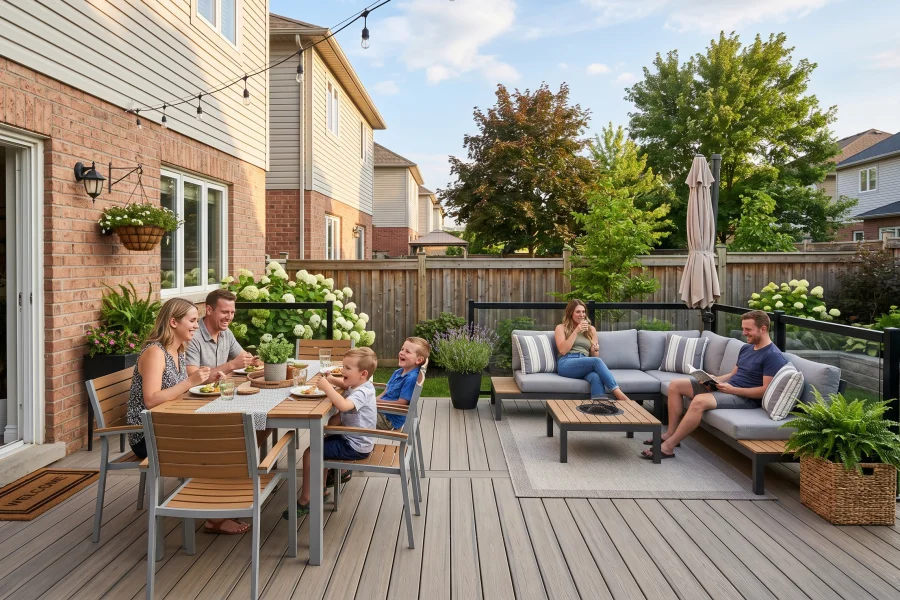
A small backyard can feel limiting when you’re planning a new deck. You want enough room to relax, entertain, and enjoy the outdoors, but you also don’t want a structure that overwhelms the property or leaves little space for anything else.
Many homeowners assume the solution is to build the largest deck possible. In reality, the most successful small backyard projects are rarely the biggest. They’re the ones designed around how the space will actually be used.
A well-planned deck can make a compact yard feel larger, create better flow between indoor and outdoor living areas, and provide dedicated spaces for dining, relaxing, and entertaining.
The goal isn’t simply to add square footage. The goal is to create an outdoor space that feels comfortable, practical, and enjoyable every day.
Start With How You Want to Use the Space
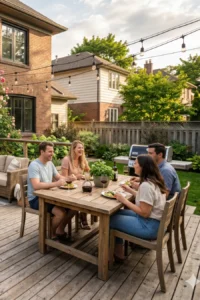 One of the biggest mistakes homeowners make is focusing on dimensions before defining purpose.
A deck designed for weekend barbecues will look very different from one intended for quiet evenings outdoors. Likewise, a family with young children will have different priorities than a couple looking for a private retreat.
Before deciding on a layout, consider questions such as:
- Will the deck be used primarily for dining or relaxing?
- How many people will regularly use the space?
- Do you want room for a grill or outdoor kitchen?
- Will children or pets need access to the yard?
- Do you want to preserve lawn space for other activities?
The answers often reveal that a smaller, smarter layout can outperform a much larger deck that wasn’t designed around real-world use.
Single-Level Decks Remain the Most Versatile Option
For many small backyards, a single-level deck provides the best balance between functionality, cost, and visual appeal.
Without multiple elevations or complicated transitions, more of the available square footage becomes usable living space. Furniture placement tends to be easier, traffic flows naturally, and the overall design feels clean and organized.
Imagine a homeowner with a modest suburban backyard who wants space for a dining table, a grill, and a few lounge chairs. A simple single-level layout can comfortably accommodate all three while still preserving valuable yard space.
Simple layouts often create the most comfortable outdoor living spaces.
This approach is especially effective when the goal is to create a seamless extension of the home rather than a complex outdoor structure.
Create Zones Instead of Building Bigger
One of the most effective ways to make a small deck feel larger is to divide it into functional zones.
Rather than treating the entire deck as one open area, consider how different activities can be grouped. A dining space might sit closest to the house, while a small seating area occupies another section of the deck.
This strategy helps the space feel intentional and organized.
For example, a homeowner with a 16′ x 18′ deck may discover that separating dining and lounging areas creates a much more comfortable environment than filling the entire space with random furniture.
A smaller deck with a clear purpose often feels larger than a bigger deck with poor organization.
The result is a deck that feels larger because every area has a clear purpose.
Corner Deck Layouts Can Preserve Valuable Backyard Space
Not every deck needs to span the entire width of the house.
In smaller yards, corner layouts often provide a better balance between outdoor living and open space. By positioning the deck in one section of the backyard, homeowners can create a dedicated gathering area while preserving lawn space for pets, children, landscaping, or future improvements.
This approach works particularly well on narrow lots where every square foot matters.
A homeowner might initially envision a deck stretching across the entire rear of the property. After seeing the layout on paper, however, they often realize that a corner design delivers the same functionality while leaving the yard feeling far more open.
Raised Decks Offer More Than Just Views
 Properties with sloped terrain or elevated rear entrances often require raised decks. While some homeowners see this as a challenge, it can actually create additional opportunities.
A raised deck introduces usable space beneath the structure. Depending on the property, that area may be used for storage, covered seating, or future outdoor improvements.
Instead of increasing the deck footprint, homeowners effectively gain extra functionality without sacrificing more of the backyard.
This can be especially valuable on smaller lots where expanding outward isn’t always practical.
Don’t Underestimate the Impact of Stair Placement
Stairs are often treated as an afterthought, but on a small deck they can dramatically affect usability.
Poorly positioned stairs can interrupt traffic flow, limit furniture placement, and reduce valuable living space. A staircase that works perfectly on a large deck may feel intrusive on a smaller one.
For that reason, stair placement should be considered early in the planning process.
On small decks, stair placement can have a bigger impact than overall deck size.
A well-positioned staircase creates a natural connection between the deck and the yard while allowing the main living area to remain open and functional.
Best Features for Small Deck Layouts
When space is limited, every design decision matters.
Choosing the right features can improve functionality without increasing the deck footprint.
- Built-in benches
- Multi-purpose seating areas
- Corner dining spaces
- Integrated storage
- Simple railing systems
- Strategically placed stairs
The most successful small deck projects focus on functionality rather than size.
Common Mistakes That Make Small Decks Feel Smaller
Many disappointing deck projects share similar planning mistakes.
- Building the largest deck possible instead of the most functional one.
- Ignoring furniture dimensions during the design phase.
- Placing stairs without considering traffic flow.
- Eliminating too much usable yard space.
- Hiring contractors before finalizing a layout.
- Skipping professional planning and permit preparation.
Most of these issues are preventable when homeowners take the time to define the project before construction begins.
A Real-World Example
A homeowner approached a project believing they needed a deck that stretched nearly the entire width of their house.
On paper, the concept seemed appealing. More square footage should mean more functionality, right?
Once furniture placement and backyard use were considered, a different picture emerged. Large portions of the deck would rarely be used, while the oversized footprint would eliminate much of the remaining lawn.
After revising the design, they chose a smaller multi-zone layout with improved stair placement and dedicated areas for dining and lounging.
The final result cost less, preserved more yard space, and provided a better experience for everyday use.
The project succeeded not because the deck was larger, but because it was planned more carefully.
Quick Checklist Before Finalizing Your Deck Layout
Before moving forward, make sure you can answer “yes” to the following questions:
- Does the deck support how my family will actually use the space?
- Have I accounted for furniture and walking areas?
- Will I still have enough usable yard space?
- Are the stairs located in the most practical position?
- Can contractors accurately quote the project from my plans?
- Am I confident this layout will work five years from now?
If any answer is “no,” it may be worth revisiting the design before construction begins.
Why Professional Planning Matters
Small backyards leave little room for mistakes. A few feet in the wrong direction can affect furniture placement, yard usability, project costs, and even permit requirements.
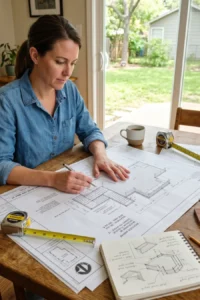
Professional deck plans help homeowners visualize the finished project before construction starts. They also make it easier to compare contractor bids, identify potential challenges, and move forward with confidence.
Clear plans often save both time and money because problems are solved on paper rather than during construction.
Explore our Deck Design Service.
Need permit-ready drawings? Visit our Deck Permit Plans.
Start here: Design Your Deck
FAQ: Best Deck Layout Ideas for Small Backyards
What is the best deck layout for a small backyard?
The best layout depends on how you plan to use the space. Single-level and multi-zone designs are often popular because they maximize functionality without overwhelming the yard.
Should I build a deck across the entire back of my house?
Not necessarily. Many homeowners find that a smaller, strategically positioned deck creates a better balance between outdoor living space and usable yard area.
How much space should I leave for furniture?
Furniture should be considered during the planning stage. Tables, chairs, grills, and walking paths require more space than many homeowners initially expect.
Are built-in benches a good option?
Yes. Built-in seating can improve functionality while reducing clutter and preserving valuable floor space.
Can a small deck still work for entertaining?
Absolutely. A well-designed small deck often feels more comfortable and functional than a larger deck with poor organization and traffic flow.
When Space Is Limited, Smart Design Matters Most
A small backyard does not mean you have to compromise on comfort, functionality, or outdoor enjoyment.
The best deck layouts are designed around how homeowners actually use their space. When the layout supports daily life, even a modest deck can feel spacious, comfortable, and highly functional.
Careful planning helps you maximize every square foot before construction begins.