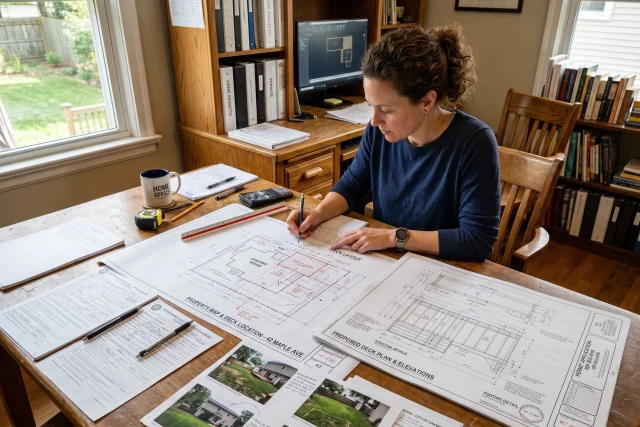
One of the most common questions homeowners ask when planning a new deck is, “What do I need to submit for a permit?”. Unfortunately, there isn’t a universal answer.
Building departments across the United States may have different processes, forms, and review procedures. However, most jurisdictions look for the same core information before approving a deck project. Their goal is simple: to understand what you’re building, where it will be located, and whether the plans provide enough detail to evaluate the project properly.
Many permit delays occur not because the deck design is problematic, but because the submitted drawings are incomplete or unclear.
Understanding what building departments typically require can help homeowners prepare more effectively, avoid unnecessary revisions, and move through the permit process with greater confidence. Homeowners looking for professional assistance can explore our Deck Permit Plans service.
Why Deck Permit Plans Matter
Deck permit plans do much more than satisfy an administrative requirement.
They provide a clear representation of the project before construction begins. Contractors use them to understand the scope of work, homeowners use them to visualize the design, and permit reviewers use them to evaluate the proposal.
Without clear plans, misunderstandings become more likely. A contractor may interpret the layout differently than intended. A reviewer may request additional information. Project timelines can quickly extend beyond expectations.
The planning phase is often where homeowners save the most time, money, and frustration.
For that reason, investing time in the planning phase often saves considerable time later.
What Are Deck Permit Plans?
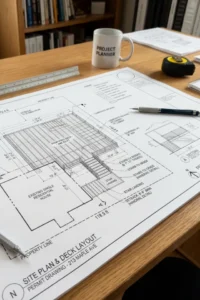 Deck permit plans are a collection of drawings and project details prepared for permit review. While requirements vary by jurisdiction, permit plans generally communicate:
- The size and location of the deck
- How the structure will be arranged
- How it relates to the house and property
- Key construction details
- Important dimensions and notes
Think of permit plans as the project’s roadmap. They help everyone involved understand exactly what is being proposed before construction starts.
If you’re still evaluating different project options, our Custom Deck Plans service can help you develop a design tailored to your property before moving into permit preparation.
The Information Building Departments Typically Want to See
Although every jurisdiction has its own requirements, most permit reviewers expect to see several key pieces of information.
Site Plan
A site plan shows where the deck will be located on the property. This is often one of the first documents reviewers examine because it helps them understand how the project relates to the surrounding lot.
A typical site plan may identify:
- The house location
- Property lines
- Existing structures
- Proposed deck location
- Setback relationships
- Significant site features
For many homeowners, this is where potential issues are identified early. A deck that fits perfectly from a design standpoint may still require adjustments if its location conflicts with setback requirements or other site restrictions.
Proper site planning is one of the most important steps in the process. Learn more in our guide on How to Plan a Deck Project.
Deck Layout and Dimensions
Building departments generally need to understand the overall size and configuration of the deck. This information often includes:
- Length and width
- Shape of the deck
- Stair locations
- Entry and exit points
- Major design features
Clear dimensions help reviewers evaluate the project and reduce the likelihood of follow-up questions. A simple sketch may communicate the general idea, but permit reviewers usually need enough detail to understand the project precisely.
Determining the right dimensions is often one of the first planning decisions homeowners face. Our guide on choosing the right deck size can help.
Framing Information
Reviewers often want to understand how the deck is organized structurally. This does not necessarily mean every project requires extensive engineering documentation, but plans typically need to show how major components are arranged.
Examples may include:
- Beam locations
- Joist layout
- Post placement
- Framing direction
- Structural relationships
The more clearly these elements are presented, the easier it becomes for reviewers to evaluate the proposal.
Stair Layouts
Stairs are one of the most commonly overlooked portions of a deck project. Homeowners frequently focus on the platform itself while giving less attention to how people will move between the deck and the yard.
Because stairs affect safety, usability, and overall design, permit reviewers often expect to see them clearly represented within the plans. Providing stair information upfront can help avoid revision requests later in the process.
Guardrails and Safety Features
If the project includes guardrails or other safety-related elements, building departments may expect those features to be reflected in the drawings.
The exact requirements vary, but reviewers generally want to understand how safety-related components fit into the overall design. Including these details early can make the review process more efficient.
Connection Details
When a deck is attached to a home, reviewers may need information showing how the connection is intended to work.
This area often receives particular attention because the relationship between the house and deck affects the overall structure. Clear drawings help reviewers understand the proposed design and reduce uncertainty during plan review.
Why Incomplete Plans Cause Delays
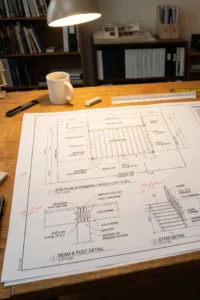 Permit reviewers can only evaluate the information provided. When key details are missing, they often have no choice but to request revisions or additional documentation.
Common issues include:
- Missing dimensions
- Incomplete site information
- Unclear stair layouts
- Inconsistent measurements
- Missing structural details
- Lack of project notes
None of these issues necessarily mean the project cannot be approved. However, they can slow down the review process significantly. For homeowners eager to start construction, those delays can be frustrating and expensive.
Many permit issues stem from avoidable mistakes during the planning phase. You may also find our article on Why Deck Permits Get Rejected helpful.
A Real-World Example
A homeowner planned a raised deck for the rear of their property and submitted a basic sketch showing the overall footprint. The layout looked straightforward, but several important details were missing. The permit office requested clarification regarding the stair location, deck placement relative to the property, and additional structural information.
The homeowner ultimately provided revised drawings and received approval, but the process took considerably longer than expected. Had those details been included from the beginning, much of the back-and-forth communication could have been avoided.
Why Professional Permit Plans Often Save Time
Many homeowners attempt to piece together permit documentation themselves. In some situations, that works well. However, as projects become larger or more complex, detailed permit-ready plans often provide significant advantages.
- Improve clarity
- Reduce revision requests
- Support permit submissions
- Improve contractor communication
- Create more accurate project pricing
- Reduce planning uncertainty
Professional permit plans often cost far less than the delays and revisions caused by incomplete submissions.
Most importantly, they allow potential issues to be addressed before construction begins.
Preparing for a Smoother Permit Process
Before submitting any plans, it helps to take a step back and review the project from a permit reviewer’s perspective. Ask yourself:
- Does the layout clearly show the proposed deck?
- Are dimensions easy to understand?
- Is the deck location shown accurately?
- Are stairs included?
- Is the relationship to the house clear?
- Have local submission requirements been verified?
The more complete the plans, the smoother the review process is likely to be.
Permit requirements often vary by location. For a broader overview, see our guide to Deck Permit Requirements by State.
How i-Decks Helps Homeowners Prepare Permit Plans
At i-Decks, we help homeowners create permit-ready deck plans designed to support the approval process and provide clear direction for construction. As a nationwide provider of deck planning services, i-Decks helps homeowners move from initial ideas to permit-ready drawings with greater confidence.
Our services include:
- Custom deck design plans
- Permit-ready drawings
- Screened porch plans
- Layout optimization
- Contractor-ready documentation
Whether you’re building a simple backyard deck or a more complex outdoor living space, clear plans can help reduce confusion and improve project outcomes. If you’re still exploring options, our Deck Design Service can help you develop the right layout before moving into permit preparation.
You can also learn more about our process on the How It Works page.
Frequently Asked Questions
What are deck permit plans?
Deck permit plans are drawings and project documents prepared for permit review. They help building departments understand what is being proposed before construction begins.
Does every building department require the same information?
No. Requirements vary by city, county, and jurisdiction. However, many building departments request similar types of project information.
Why do permit applications get delayed?
Delays often occur when plans are incomplete, unclear, or missing information needed for review.
Do I need professional plans for a deck permit?
Not always. Requirements vary by location and project complexity. However, detailed plans can often simplify the review process.
Can permit plans help contractors too?
Yes. Clear plans help contractors understand the project scope, prepare more accurate estimates, and reduce misunderstandings during construction.
Successful deck projects start long before construction begins. By understanding what building departments typically require and preparing clear, complete permit plans, homeowners can reduce delays, improve communication, and move through the approval process more confidently.
A permit reviewer should be able to understand the project without guessing. The clearer the plans, the easier that becomes.
Ready to Prepare Your Deck Permit Plans?
i-Decks helps homeowners nationwide create custom deck designs and permit-ready drawings that support smoother project planning. Whether you’re just starting to explore ideas or preparing for permit submission, clear plans can help reduce delays and improve project outcomes.
Ready to start planning? Visit Design Your Deck to begin your project.
If you’re unsure whether your project may require approval, read our guide on Do You Need a Permit to Build a Deck?. Many homeowners begin by exploring our Custom Deck Plans service before moving into permit preparation.